By A Memory Care Family Advocate · Updated October 2026

If you've started losing words mid-sentence, waking at 3 AM most nights, or watching someone you love "slip a little" — you need to hear this.
Most families hear the same talk: "Some mild changes. Very common at your age. Try a crossword. Take some fish oil. We'll retest in six months."
What nobody tells them is what those six-month appointments turn into.

A slow walk toward a locked door. Year after year, the slips get bigger. A lost word becomes a lost name. A lost name becomes a wrong turn on a road you've driven for thirty years. Until one appointment ends with the words every family dreads: "I think it's time to talk about memory care."
The kind of fog that has nothing to do with being tired. The kind where you read the same paragraph four times and it still won't stay.
The 3 AM wake-ups. Heart pounding. Mind racing. Lying there until the alarm, already exhausted before the day starts.
The notes on the fridge. The car keys that quietly go missing. The kids who stop leaving the grandchildren alone with you. The things you've done your whole life suddenly become the things people watch you do.
And the waiting lists. The facility tours. The paperwork your children sign while you sit in the hallway.
“Here's what nobody tells you: monitoring memory loss isn't protecting your memory. It's watching the decline.”
And if you do nothing? The slips keep coming. You're not "stable." You're falling slowly.
So most people get stuck choosing between two paths that both end in the same place.
Path one: Follow the routine. Do the brain games. Take the pill. Retest every six months. Watch the score drop anyway.
Path two: Ignore it. Call it "just getting older." Feel the fog get thicker every season.
Because here's what the early stage actually feels like, long before anyone writes a diagnosis in a chart:
The word that's right on the tip of your tongue and won't come.
The 3 AM wake-up that's become your normal.
The fog that rolls in every afternoon like clockwork.
That's your brain raising its hand asking for help. Most people over 50 ignore those signs for years, until the day a memory test comes back and they realize the easy window closed a long time ago.
But there's a third path most doctors will never bring up.

Every day your brain makes waste. Every night, in the deepest part of sleep, it rinses that waste out — like doing the dishes before bed. Deep sleep is also when your brain files away what happened today, so you can find it tomorrow.
To get down into that deep sleep and stay there, your nervous system needs a brake. That brake runs on magnesium. It helps calm the "go" signals in your brain, helps your muscles release, and helps keep cortisol from spiking in the middle of the night.
The brake fails. You fall asleep from exhaustion, and at 3 AM the engine roars back. Night after night, the rinse gets cut short.
Large studies have followed people for decades. Those who slept six hours or less through their fifties and sixties carried a higher risk of dementia later in life. The broken nights show up first — years, sometimes decades, before the first lost word.
Your doctor measures the result — the memory score, the bloodwork — but rarely asks the one question that matters: "How deep are you sleeping?" And the bloodwork can't tell you, because less than 1% of your body's magnesium is in your blood. Your body pulls it from your bones to keep that number looking "normal."

There's one thing I've been telling families for years — the daughters, sons and spouses who sit across from me at 50, 60, 70 years old, terrified they're next.
Fix the nights first. And fix them with the right mineral, in the right form.
They sleep through the night. The 3 AM wake-up becomes the exception instead of the rule.
The afternoon fog lifts. The word comes back on time. They stop walking into rooms and forgetting why.
And the thing I hear most: "I feel like myself again."
The mineral I'm talking about is magnesium — but not the cheap white tablets on the bottom shelf, and not half of what's sold as "magnesium glycinate" online.
Every time I bring it up, I get the look.
Raised eyebrows.
That "You mean... the stuff I already take?" face.
I get it. You've already tried magnesium, right?
You'd need a form your body actually absorbs — not oxide. You'd need it to be what the label says, not "glycinate" cut with cheap filler. And you'd need to know where it was made and who tested it — not bulk powder shipped in from overseas that nobody ever checked.
What actually works is a properly made magnesium glycinate that clears all three. No guessing. No hidden blend. No drugstore rock that never gets in.
And I tell nearly every family I sit with, especially the ones waking at 3 AM and losing words: turn your bottle over tonight.
Magnesium bound to glycine, an amino acid your body already knows. It's absorbed instead of sitting in your gut. And glycine itself helps the nervous system settle at night.
When the brake comes back, the night comes back with it. You go down. You stay down. The rinse runs.
No prescription. No grogginess. Just two capsules at night that could help you:
✓Fall asleep and stay asleep through the 3 AM window*
✓Support memory and focus*
✓Support healthy brain function*
✓Calm a wired, always-on nervous system*
✓Support relaxation and mental balance*
✓Ease the night-time muscle tension that keeps you up*
✓Wake up clear instead of foggy*
It's gentle. It's simple. And when it's the real thing, it works the way magnesium was always supposed to.
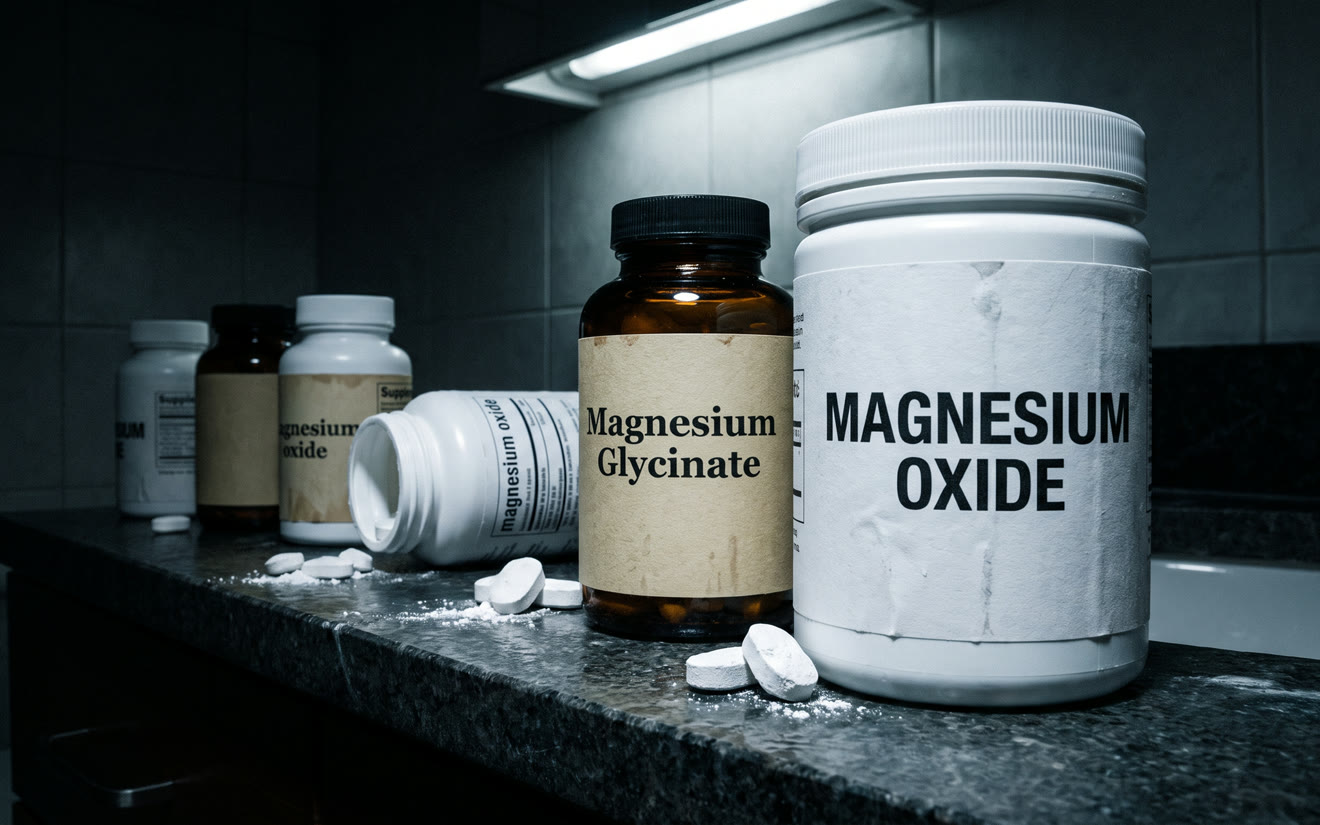
But before you grab any magnesium off Amazon, there are two things you need to know.
First, you might be thinking: "But I already do crosswords" or "I take fish oil" or "My doctor gave me melatonin."
And yes, those help. A little.
But here's the problem:
Crosswords keep you busy, but they don't fix a brain that hasn't had real deep sleep in ten years.
Fish oil is fine, but it doesn't touch the 3 AM wake-ups.
Melatonin tells your brain what time it is. You already know what time it is — you're staring at the clock.
Sleeping pills? They knock you out. They don't give you deep sleep. That's why you wake up foggier, and why the dose creeps up.
They're all aimed at pieces of the picture, but they all miss the brake.
“That's why the right magnesium works when everything else only fills the time.”
Second, not all magnesium is created equal.
Most magnesium on the shelf? Not helpful.
Wrong form. Fake labels. Nobody checking.
Here's what the supplement industry doesn't advertise:
1. Wrong form. Most drugstore magnesium is oxide — the cheapest form there is. In a well-known absorption study, people absorbed only about 4% of it. That "400 mg" on the front? About 16 mg gets in. The rest sits in your gut, which is why so many people say magnesium "just upsets my stomach."
2. Fake glycinate. Real glycinate costs more to make. So many brands cut it with cheap oxide to hit a big number on the label. They call it "buffered." Glycinate on the front. Oxide on the back.
3. Nobody tested it. Much of what's sold here starts as bulk powder shipped in from overseas. No origin on the label. No independent testing. You're taking it entirely on trust.
You weren't taking magnesium for your brain. You were taking rock in a nicer bottle.
I watched families spend years on bottles that never moved a single thing.
To make sure you're getting magnesium that actually reaches you, it has to be:
Fully reacted magnesium glycinate, not oxide, not citrate
One ingredient only — no buffering, no blend, no filler hiding behind the name
The real elemental number printed on the label, not an inflated compound number
Made in the USA in an FDA-registered facility
Third-party tested every batch by a lab that doesn't work for the brand
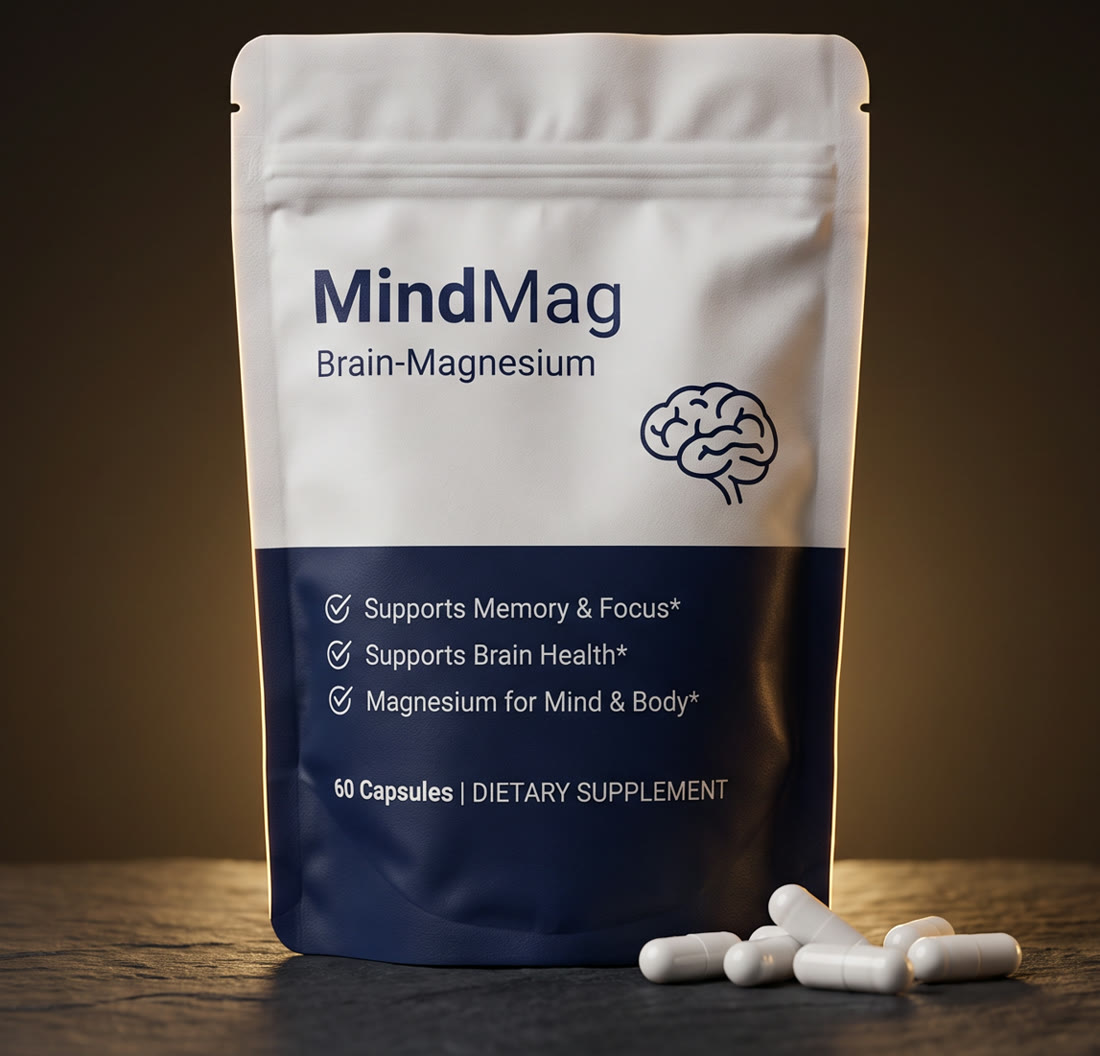
The only brand I know that meets every one of those standards is called MindMag Brain-Magnesium.
Other brands claim to sell glycinate, but most use oxide, "buffer" it, or never tell you where it came from. Some are doing all three at once.
FORMFully reacted magnesium glycinate. One ingredient.
DOSE180 mg of elemental magnesium per 2 capsules, printed on the panel
ORIGINMade in the USA in an FDA-registered facility
PURITYNo oxide, no buffering, no proprietary blend
TESTEDThird-party tested every batch
ROUTINE2 capsules at night
Tested by an independent lab, every batch. No shortcuts in the manufacturing.
Two capsules. After dinner. That's it.
It's become a nightly ritual for families who were tired of watching the clock at 3 AM.
And it's the first thing I mention when a daughter tells me, quietly, "I think I'm starting to forget things too."
Fix the nights first. The days follow.
Real magnesium glycinate. One ingredient. Made in the USA. Third-party tested every batch.
Give it real time. Track how often you wake at 3 AM, how you feel in the afternoon, and how often the right word shows up on time. Your body has been running low for years; it takes a while to catch up.
Most people notice the nights change first. The fog and the lost words usually follow over the next several weeks. Give it the time your body needs to catch up.
Then turn your current bottle over tonight. If it says oxide, or glycinate on the front and oxide on the back, or nothing about where it was made — you already know why it never worked.
Fix the brake. Sleep through the night. Wake up sharp.
Scientific References
1. Diekelmann S, Born J. The memory function of sleep. Nat Rev Neurosci. 2010;11(2):114-126. doi:10.1038/nrn2762
2. Xie L, Kang H, Xu Q, et al. Sleep drives metabolite clearance from the adult brain. Science. 2013;342(6156):373-377. doi:10.1126/science.1241224
3. Kirkland AE, Sarlo GL, Holton KF. The role of magnesium in neurological disorders. Nutrients. 2018;10(6):730. doi:10.3390/nu10060730
4. Boyle NB, Lawton C, Dye L. The effects of magnesium supplementation on subjective anxiety and stress — a systematic review. Nutrients. 2017;9(5):429. doi:10.3390/nu9050429
5. Abbasi B, Kimiagar M, Sadeghniiat K, et al. The effect of magnesium supplementation on primary insomnia in elderly: a double-blind placebo-controlled clinical trial. J Res Med Sci. 2012;17(12):1161-1169. PMID: 23853635
6. Sabia S, Fayosse A, Dumurgier J, et al. Association of sleep duration in middle and old age with incidence of dementia. Nat Commun. 2021;12(1):2289. doi:10.1038/s41467-021-22354-2
7. Jahnen-Dechent W, Ketteler M. Magnesium basics. Clin Kidney J. 2012;5(Suppl 1):i3-i14. doi:10.1093/ndtplus/sfr163
8. Alateeq K, Walsh EI, Cherbuin N. Dietary magnesium intake is related to larger brain volumes and lower white matter lesions with notable sex differences. Eur J Nutr. 2023;62(5):2039-2051. doi:10.1007/s00394-023-03123-x
9. Firoz M, Graber M. Bioavailability of US commercial magnesium preparations. Magnes Res. 2001;14(4):257-262. PMID: 11794633
10. Schuette SA, Lashner BA, Janghorbani M. Bioavailability of magnesium diglycinate vs magnesium oxide in patients with ileal resection. JPEN J Parenter Enteral Nutr. 1994;18(5):430-435. doi:10.1177/0148607194018005430
11. Yamadera W, Inagawa K, Chiba S, et al. Glycine ingestion improves subjective sleep quality in human volunteers, correlating with polysomnographic changes. Sleep Biol Rhythms. 2007;5(2):126-131. doi:10.1111/j.1479-8425.2007.00262.x